Address
15 Qingnian West Road, Shiyan Subdistrict, Bao’an District, Shenzhen, Guangdong, China.
Work Hours
Monday – Friday: 24 Hours
Weekend: 24 Hours
Address
15 Qingnian West Road, Shiyan Subdistrict, Bao’an District, Shenzhen, Guangdong, China.
Work Hours
Monday – Friday: 24 Hours
Weekend: 24 Hours
Last Updated: November 4, 2026
At LevDoll, we believe that understanding a product goes beyond its appearance. The materials, manufacturing processes, and technologies behind a product all contribute to the overall ownership experience.
Jin San Wanmei (Jin San Intelligent Technology Co., Ltd.) has introduced SMP Silver Micro-Particle Technology as a specialized material approach for selected silicone doll products.
This technology is designed to incorporate silver-based microparticles into silicone material, with the aim of providing antimicrobial activity.
But what exactly is SMP technology? How does it differ from conventional silver-ion approaches? And what do independent laboratory test results actually tell us?
In this guide, we take a closer look at the manufacturer’s technical description, examine the available SGS laboratory results, and explain what this technology may mean for silicone doll owners.
Please note: SMP Silver Micro-Particle Technology is specific to applicable Jin San Wanmei products. It is not a standard feature of all silicone dolls or all brands available at LevDoll.
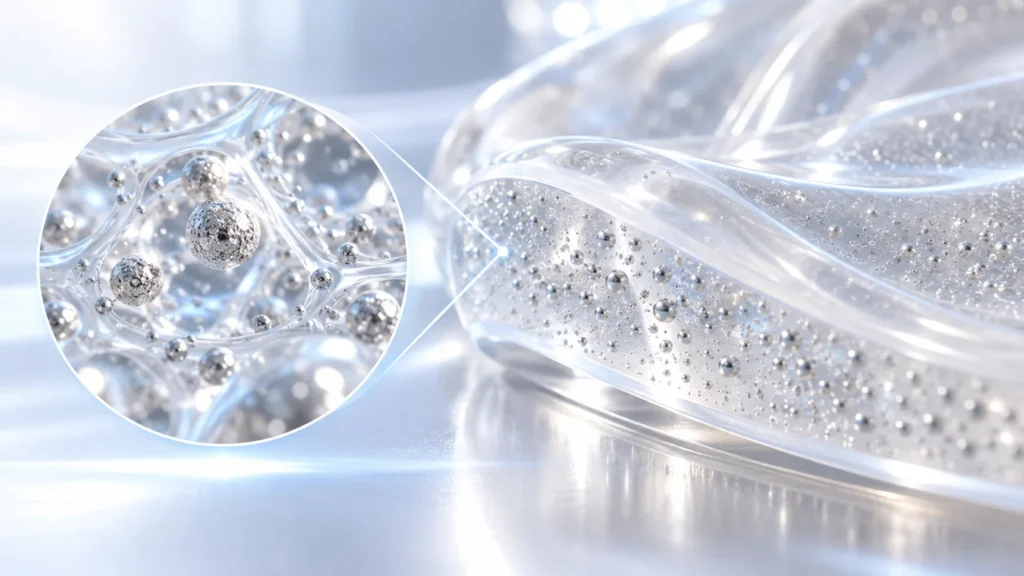
SMP Silver Micro-Particle Technology is a silver-based antimicrobial material technology developed and promoted by Jin San Wanmei.
According to the manufacturer’s technical documentation, the technology uses solid silver microparticles incorporated into silicone material rather than relying solely on a conventional silver-ion release approach.
The intended purpose is to introduce antimicrobial functionality into the treated material.
Unlike a product feature that can be understood simply by looking at its appearance, material technologies require a closer examination of their composition, manufacturing approach, and measurable performance.
For this reason, we consider three aspects when evaluating SMP technology:
The available SGS reports provide laboratory data on antimicrobial activity for a submitted silicone doll component. These results are discussed in detail below.
It is important to distinguish between the manufacturer’s description of the technology and the specific properties independently established by the laboratory reports.
If you are new to silicone doll materials and want to understand the differences between silicone formulations and their characteristics, read our Silicone Doll Buying Guide for a more comprehensive introduction.
According to Jin San Wanmei’s technical description, SMP technology incorporates solid silver microparticles into the silicone material.
The manufacturer describes this approach as material integration rather than relying exclusively on the release of silver ions from a separate antimicrobial treatment.
The following illustration provides a simplified conceptual explanation of the manufacturer’s stated approach.
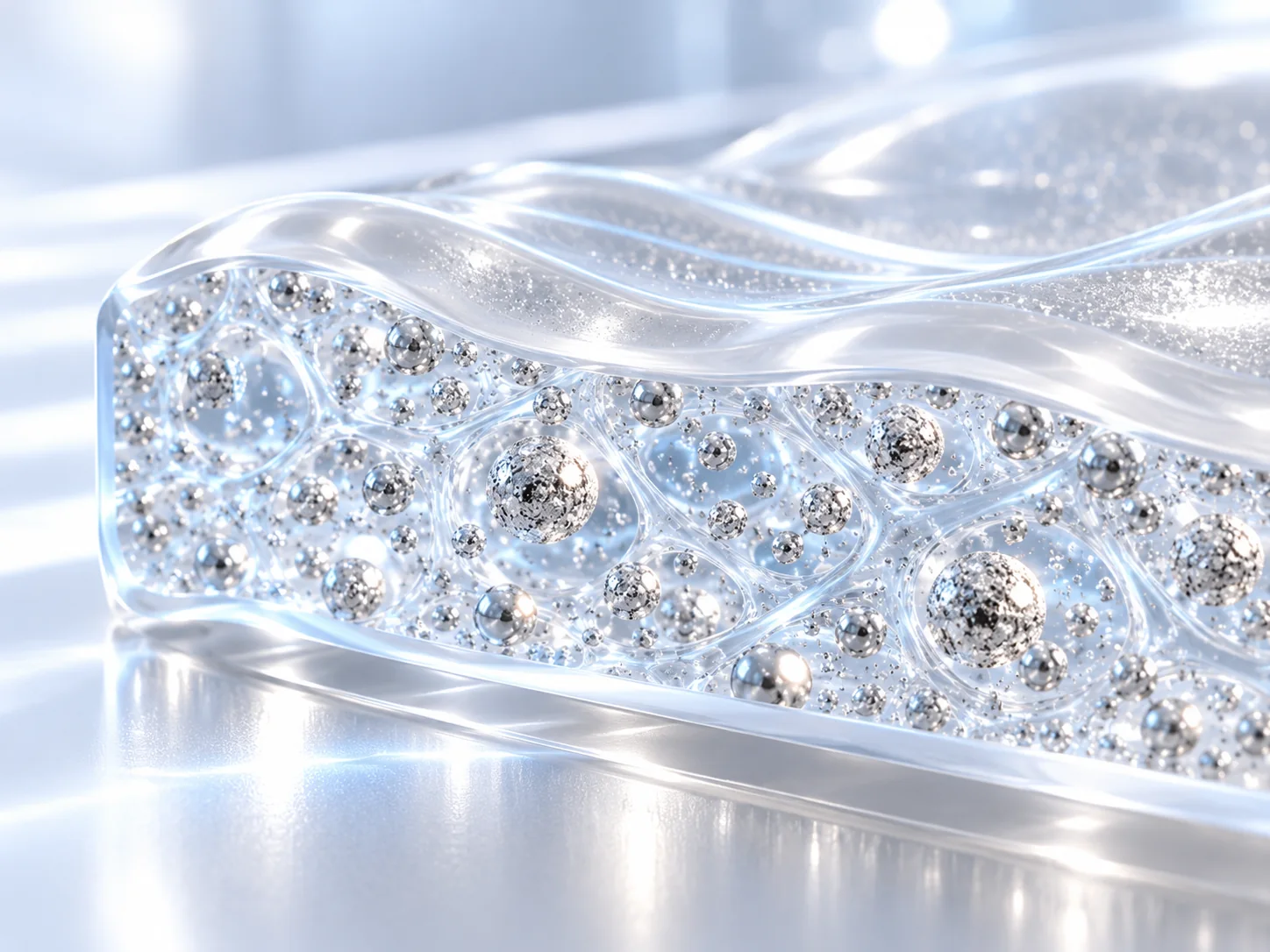
Step 1 — Material Incorporation
Silver-based microparticles are introduced into the silicone material during the manufacturing process.
Step 2 — Material Integration
The manufacturer’s stated approach is to incorporate these particles into the silicone structure rather than relying solely on a separate surface treatment.
Step 3 — Antimicrobial Activity
The treated material is designed to demonstrate antimicrobial activity when exposed to specified microorganisms.
The actual level of antimicrobial activity must be evaluated through appropriate laboratory testing.
The proposed material approach is part of the manufacturer’s technical description.
However, the available SGS reports measure antimicrobial activity. They do not independently establish the precise microscopic integration mechanism, particle retention, silver migration, or long-term durability.
These properties require additional material characterization and testing.
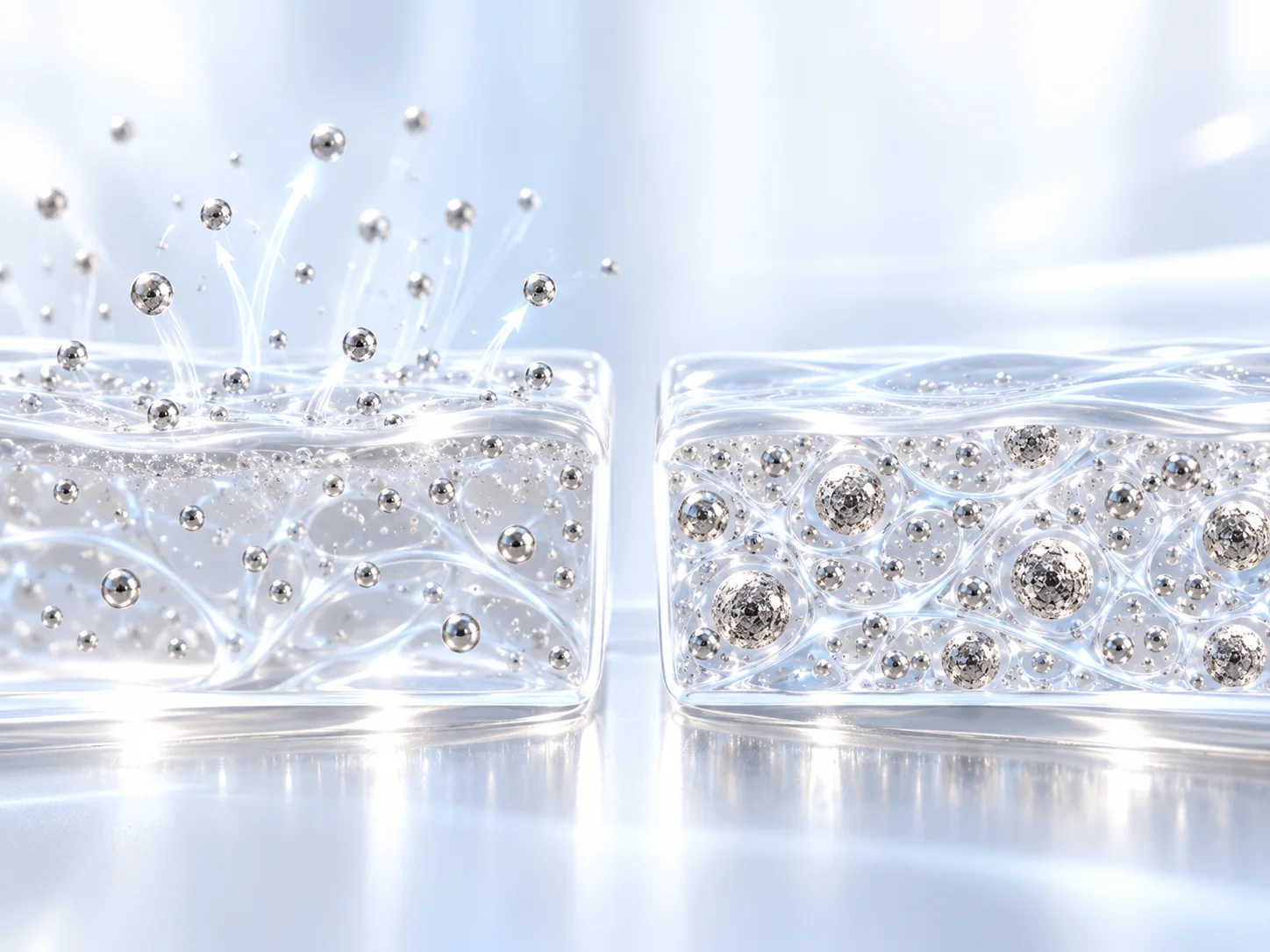
Silver-based antimicrobial technologies are not all the same.
Different materials may use different forms of silver, incorporation methods, and mechanisms to produce antimicrobial activity.
One important distinction is whether a material is designed around silver-ion availability or incorporates solid silver-based particles into the material structure.
| Comparison | SMP Silver Micro-Particle Approach | Conventional Silver-Ion Approaches |
|---|---|---|
| Silver form | Manufacturer describes solid silver microparticles | Silver in ionic form or silver-containing antimicrobial materials |
| Material approach | Designed to incorporate particles into silicone | May use silver-containing additives or release-based formulations |
| Intended antimicrobial mechanism | Manufacturer describes a material-based approach | Often depends on the availability of silver ions |
| Performance | SGS laboratory results are available for a specified submitted sample | Depends on the particular formulation and test conditions |
| Long-term stability | Requires additional durability and migration testing | Depends on formulation, release characteristics, and usage conditions |
Not necessarily.
Conventional silver-ion technologies vary considerably in formulation and performance. Their effectiveness and stability should be evaluated using product-specific evidence.
Likewise, claims that an embedded silver-particle approach is permanently stable, does not release silver, or outperforms all conventional silver-ion technologies require appropriate comparative testing.
For consumers, the most meaningful comparison is not simply the name of a technology, but the quality of the supporting evidence.
If you are comparing different doll materials before making a purchase, our guide to Silicone vs. TPE Dolls explains the key differences between these two popular materials.
One of the most important parts of evaluating an antimicrobial material is understanding how it performs under controlled laboratory conditions.
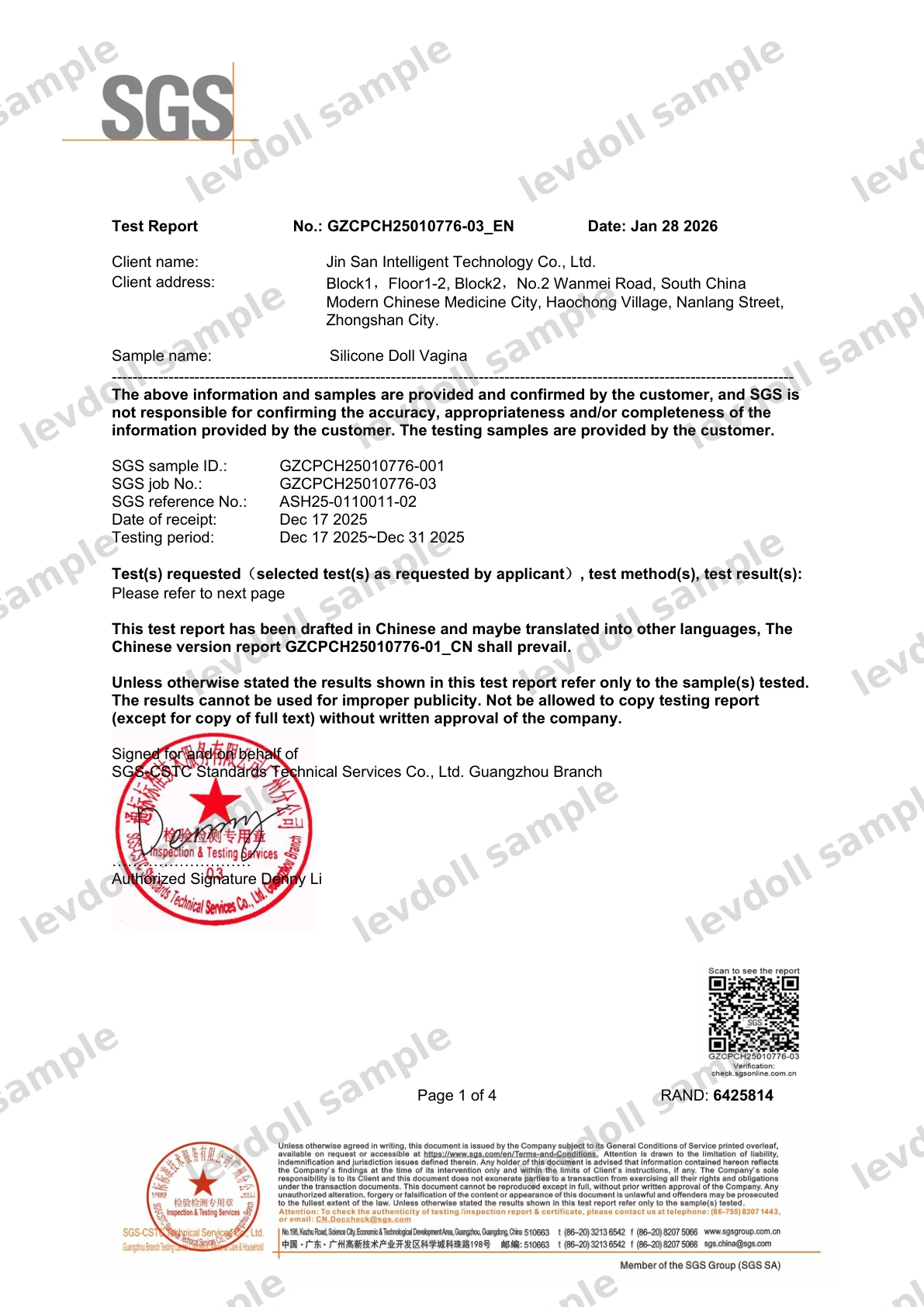
Jin San Intelligent Technology Co., Ltd. submitted a sample identified in the SGS reports as:
Sample Name: Silicone Doll Vagina
The testing was conducted by SGS-CSTC Standards Technical Services Co., Ltd., Guangzhou Branch.
The English reports were issued on January 28, 2026, and document testing conducted from December 17 to December 31, 2025.
The laboratory used:
GB/T 31402-2023 — Measurement of Antibacterial Activity on Plastics and Other Non-Porous Surfaces
This method is identified in the report as equivalent to ISO 22196:2011.
The tests evaluated antimicrobial activity after a 24-hour inoculation period.
According to SGS Test Report No. GZCPCH25010776-03_EN, the submitted sample demonstrated the following reported antimicrobial activity rates:
| Test Microorganism | Reported Antimicrobial Activity |
|---|---|
| Escherichia coli (E. coli) | >99.99% |
| Pseudomonas aeruginosa | 99.96% |
| Staphylococcus aureus | 99.94% |
| Beta-hemolytic Streptococcus | 99.91% |
These results demonstrate measurable antimicrobial activity against the four specified bacterial strains under the stated laboratory conditions.
A separate test was conducted against Candida albicans, a yeast.
According to SGS Test Report No. GZCPCH25010776-04_EN:
| Test Microorganism | Reported Antimicrobial Activity |
|---|---|
| Candida albicans | 90.25% |
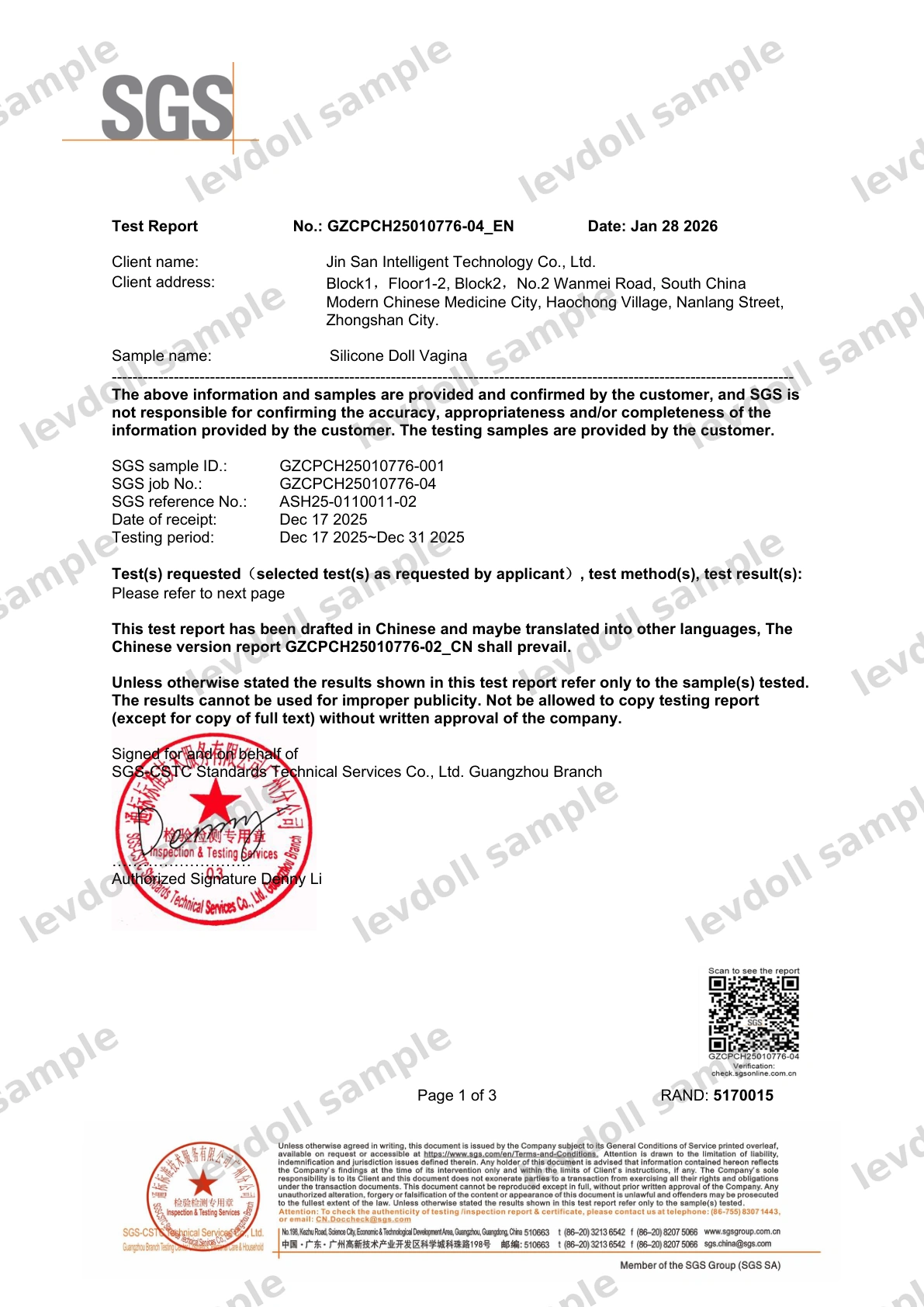
This result provides additional laboratory evidence of antimicrobial activity against a specified yeast.
The reported percentages represent antimicrobial activity measured under the specified laboratory test conditions.
They should be interpreted carefully.
For example, a reported antimicrobial activity rate of 99.99% does not mean that a product is sterile or that all microorganisms will be eliminated during everyday use.
The findings apply only to the sample tested and the conditions described in the reports.
They do not independently establish:
We believe that transparent presentation of both the results and their limitations is essential when discussing material technology.
The two English reports available for review are:
Report 1: GZCPCH25010776-03_EN
Antimicrobial activity testing against:
Report 2: GZCPCH25010776-04_EN
Antimicrobial activity testing against:
The reports provide the testing methods, sample information, laboratory results, and relevant limitations.

This is a conceptual laboratory illustration, not an actual photograph of the SGS testing process.
For consumers, the value of a material technology lies in what it may contribute to the actual product experience.
Based on the manufacturer’s description and the available laboratory findings, SMP technology offers several points worth understanding.
The technology is designed to introduce antimicrobial functionality into selected silicone components.
The available SGS results demonstrate antimicrobial activity against the specific microorganisms tested on the submitted sample.
This provides a measurable material-performance reference rather than relying exclusively on marketing descriptions.
Jin San Wanmei describes SMP as an approach that incorporates silver-based microparticles into silicone material.
This is conceptually different from relying solely on a separate antimicrobial surface treatment.
However, additional testing is needed to establish particle retention, silver migration, and long-term stability.
When comparing silicone dolls, consumers should consider more than appearance and price.
Other important factors include:
SMP technology can be one additional consideration when evaluating applicable Jin San Wanmei models.
It should not replace a broader assessment of product quality.
Choosing the right silicone doll involves more than evaluating a single technology. Explore our guide on Choosing the Right Silicone Doll to learn more about materials, construction, and important factors to consider before buying.
Even when a material demonstrates antimicrobial activity in laboratory testing, proper cleaning and maintenance remain essential.
An antimicrobial material should not be considered self-cleaning, sterile, or maintenance-free.
For silicone doll owners, we recommend the following general care practices:
Clean After Use
Follow the manufacturer’s cleaning instructions for the specific component and product.
Allow Proper Drying
Ensure that cleaned areas are properly dried before storage, especially in areas where moisture may remain.
Use Compatible Cleaning Products
Avoid unapproved chemicals, aggressive cleaning agents, excessive heat, or methods that may damage the silicone.
Inspect the Material Regularly
Check for visible damage, deterioration, or changes in the material’s condition.
Follow Manufacturer Guidance
Cleaning methods and product-specific maintenance requirements should always follow the instructions provided with the doll.
For more practical advice on maintaining silicone dolls, see our guide to Silicone Doll Care and Maintenance.
At LevDoll, we believe that technical claims should be supported by appropriate documentation and verifiable evidence.
While the available SGS laboratory reports demonstrate antimicrobial activity against specified microorganisms under controlled test conditions, some additional technical claims require separate supporting documentation.
For clarity, here is the current scope of available evidence.
SGS Antimicrobial Testing
Laboratory test results are available for a silicone doll component submitted by Jin San Intelligent Technology Co., Ltd.
The tests cover four bacterial strains and Candida albicans.
Test Method
GB/T 31402-2023, equivalent to ISO 22196:2011.
Test Reports
1. International Patent Portfolio
Manufacturer sales materials refer to 18 patents in multiple countries.
To substantiate this claim, supporting patent numbers, registration records, patent owners, and current legal status documentation should be reviewed.
2. Hong Kong and UK Research Collaboration
The manufacturer describes the technology as involving research and development teams from Hong Kong and the United Kingdom.
Supporting information identifying the relevant research entities and collaboration arrangements is required to independently substantiate this claim.
3. Silver Migration and Long-Term Stability
Claims regarding non-release, non-migration, and long-term antimicrobial durability require additional silver migration, leaching, and durability testing.
The available antimicrobial reports do not establish these properties.
4. Skin and Mucosal Safety
Claims regarding skin compatibility and intimate-contact safety require appropriate toxicological and material safety assessments.
The available antimicrobial activity reports are not comprehensive skin or mucosal safety certifications.
5. Extended Product Lifespan
Any claim of a 30% increase in product lifespan requires comparative durability testing under clearly defined conditions.
The available SGS reports do not establish an increase in product lifespan.
We distinguish between manufacturer-provided technical descriptions, independently measured laboratory results, and performance claims that require further verification.
This distinction is important because consumers deserve accurate information about both the advantages and the limitations of a material technology.
Our commitment is to present technical information responsibly, without turning unverified claims into guaranteed product benefits.
SMP Silver Micro-Particle Technology is a silver-based antimicrobial material technology developed and promoted by Jin San Wanmei. According to the manufacturer, it incorporates solid silver microparticles into silicone material.
No. SMP technology should only be associated with the specific Jin San Wanmei models and components confirmed to use it. Not every silicone doll from the brand should automatically be assumed to include this technology.
No. The manufacturer’s described approach uses solid silver microparticles incorporated into silicone material, whereas many conventional silver-ion approaches rely on the availability or release of silver ions. Actual performance depends on the specific formulation and should be evaluated through testing.
SGS reports GZCPCH25010776-03_EN and GZCPCH25010776-04_EN document antimicrobial activity testing on a submitted silicone doll component against four bacterial strains and Candida albicans.
The reports do not constitute a comprehensive certification of the entire finished doll or independently establish every claimed aspect of the SMP mechanism.
No. Antimicrobial activity measured in laboratory conditions does not mean a product is sterile or free from all microorganisms. Regular cleaning, drying, and appropriate maintenance remain necessary.
No. Antimicrobial material technology does not replace normal hygiene practices. Owners should continue following the manufacturer’s cleaning and maintenance instructions.
The available SGS reports document results under specified laboratory conditions. Long-term performance after repeated cleaning, extended use, or environmental exposure requires additional durability testing.
The available reports are GZCPCH25010776-03_EN and GZCPCH25010776-04_EN. Please refer to the laboratory report documents presented on this page, subject to the relevant publication authorization.
SMP Silver Micro-Particle Technology represents a specialized material approach promoted by Jin San Wanmei for selected silicone doll products.
Its defining feature, according to the manufacturer, is the incorporation of silver-based microparticles into silicone material.
The available SGS laboratory reports provide measurable evidence of antimicrobial activity against several specified microorganisms under controlled testing conditions.
For consumers, this offers another technical factor to consider when comparing applicable silicone doll models.
At LevDoll, we believe that a better purchasing decision comes from understanding the product, reviewing the available evidence, and recognizing the limitations of technical claims.
We will continue to focus on transparent product information, reliable brand partnerships, and helping customers make informed choices.
LevDoll — Honest Information. Informed Choices. Greater Confidence.
The information on this page is based on technical materials supplied by the manufacturer and the identified SGS laboratory reports.
The reported test results apply only to the sample tested and the specified laboratory conditions.
They do not establish sterilization, prevention of infection, universal antimicrobial effectiveness, long-term durability, skin or mucosal safety, or performance after repeated use or cleaning.
The available reports document antimicrobial activity testing. They should not be described as a comprehensive safety certification for the finished doll or as independent verification of the complete SMP technology mechanism.
SMP Silver Micro-Particle Technology is the manufacturer’s technology designation. Specific claims regarding patents, exclusive industry status, research collaboration, silver release, chemical migration, durability, or comparative superiority require separate supporting documentation.
Technology availability should be confirmed for each applicable product model with the manufacturer.