Address
15 Qingnian West Road, Shiyan Subdistrict, Bao’an District, Shenzhen, Guangdong, China.
Work Hours
Monday – Friday: 24 Hours
Weekend: 24 Hours
Complete guide to medical grade silicone dolls. Learn about features, benefits, maintenance, and buying tips. Comprehensive review with expert recommendations.
Last Updated: November 11, 2026
Light, heat and storage conditions can affect a doll’s finished materials, but there is no universal UV-care recipe for every silicone or TPE product. Start with the exact manufacturer, model and finish, and ask for written instructions before choosing a display or storage location.
This guide explains practical questions to ask about light, heat, covers and changes in appearance. It does not establish a safe exposure time, certify a window covering or recommend applying a product to an untested surface.
Sunlight includes visible light and ultraviolet radiation; a sunny location can also become warm. These are different exposures. How a finished surface, paint, hair or adhesive responds depends on its formulation, construction and exposure conditions.
The Sino Doll care guide advises customers to keep its products away from direct sunlight and heat sources. That is an example for Sino products, not proof of a universal exposure limit for another model.
The RealDoll Classic care guide also discusses avoiding prolonged direct sunlight for its Classic products. Follow the instructions for the product you own.
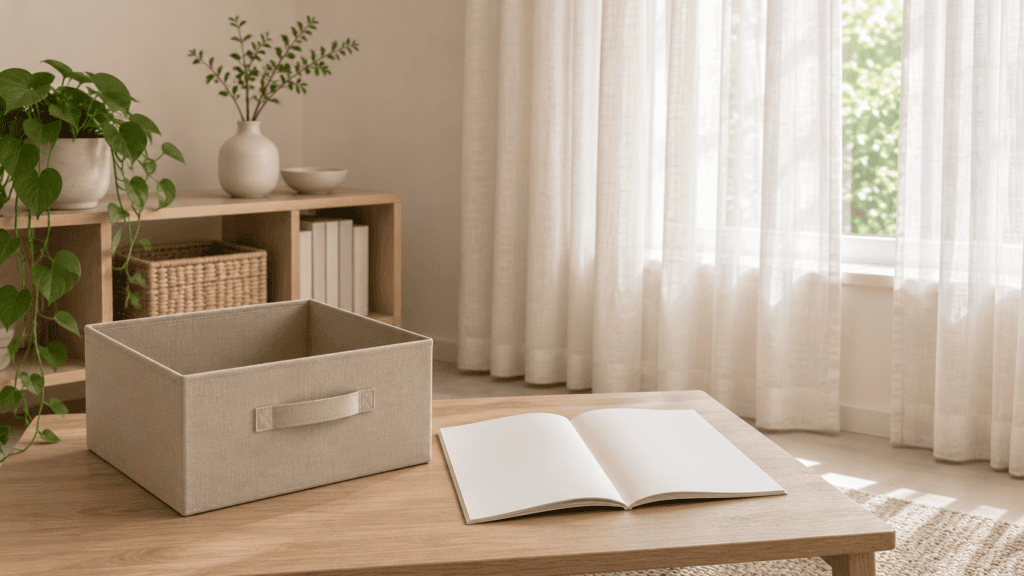
Observe how sunlight moves through the room over the day. A surface that is shaded in the morning may receive direct light later. Ask the maker where the exact product may be displayed and whether any finishes need special protection.
Curtains, blinds or a different room can change the light reaching a display, but do not assume a particular fabric or window blocks a specified percentage of ultraviolet radiation. Ask the manufacturer for its recommended arrangement; a glass pane or a closed curtain is not a substitute for product-specific care guidance.
Do not infer a safe number of minutes or hours from another person’s setup. The light source, exposure, material and finish can differ.
Check the product’s instructions for heaters, radiators, hot rooms and other heat sources. Direct sun can warm an enclosed space even when a product is not being used. Ask about environmental conditions for the complete configuration, especially if it includes electronics, paints or adhesives.
Do not use a household heat source or hot air to address a surface change unless the manufacturer provides an approved procedure. If the environment becomes unusually hot, consult the maker before moving or treating the affected product.
A cover may reduce dust or light exposure, but its material and contact with the finish also matter. Ask the manufacturer which covers, colors and supports are approved for the exact body and how the product should be positioned.
Avoid assuming that any opaque bag or fabric is suitable for prolonged contact. Dye transfer, trapped moisture and pressure marks may be concerns for some products. Keep the product dry and follow the maker’s instructions for airflow, support and storage.
Do not improvise a hanging arrangement or use a support point merely because it appears convenient. Confirm the manufacturer’s approved storage method for the specific model.
Human sunscreen, coatings, oils and sprays have not been established as universally compatible with silicone, TPE, paint or other finishes. Do not apply them to the product without the maker’s specific written approval for that surface.
A product marketed as UV protection does not establish compatibility with the finished doll or every component. Ask the seller which product, surface, method and conditions are approved. If instructions are unavailable, avoid experimenting.
Follow the manufacturer’s recommended checks. If you notice an unexpected change in color, texture, tackiness, paint or shape, stop handling the affected area and ask the seller or maker for an assessment.
Record the model and when you noticed the change. A clear photograph can help support understand the visible issue, but it cannot establish the cause. Do not assume discoloration is reversible or use stronger cleaners, solvents or heat without instructions.
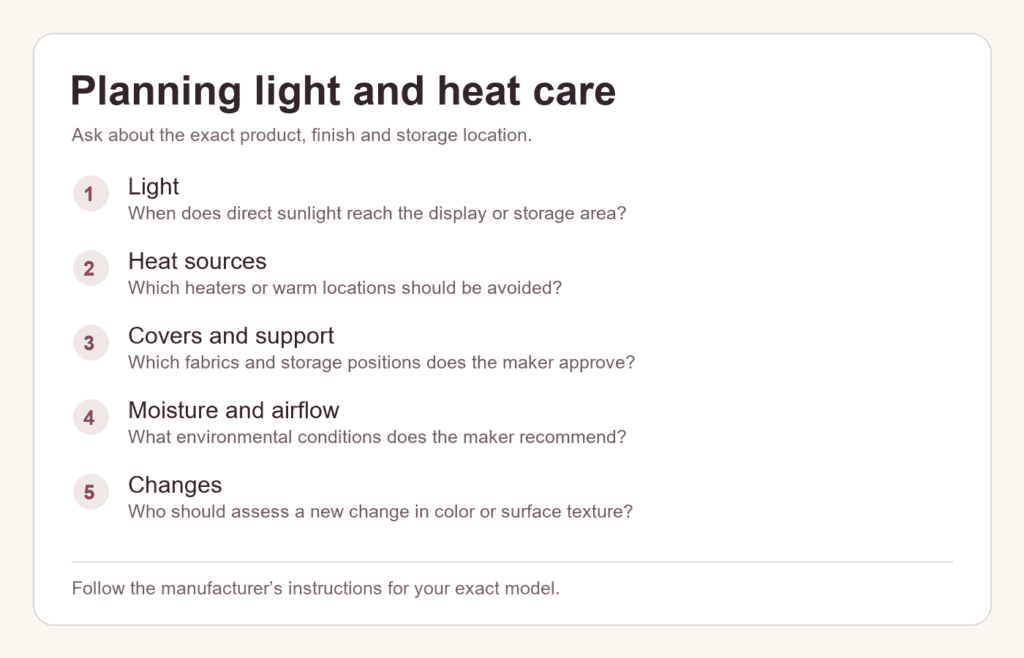
Model: Which material, finish and electronic features are included in the exact configuration?
Location: When does direct sunlight reach the display or storage area, and where are nearby heat sources?
Cover and support: Which fabrics, supports and storage positions does the maker approve?
Environment: What guidance applies to moisture, airflow and temperature?
Changes: Who should you contact if the finish or surface changes?
For a LevDoll purchase, contact the store with the product link, model and proposed location. Request the manufacturer’s current written instructions for the exact configuration.
Check the exact manufacturer’s instructions. Sino and RealDoll Classic both advise avoiding direct sunlight or prolonged direct sunlight for their respective products; those examples do not establish a safe duration for another model.
Do not assume that it does. Glass and coverings vary, and this guide does not establish a protection rating for your window. Follow the maker’s product-specific guidance.
Do not assume it is compatible. Ask the manufacturer whether a specific product is approved for the exact material and finish before applying it.
No universal cover is established. Ask about compatible fabrics, colors, airflow, support and storage positions for your product.
No. Sunlight and heat are distinct exposures, although a sunny area can also become warm. Check the maker’s guidance for both.
Stop handling the affected area and contact the seller or manufacturer with the model details and a clear photo. Do not assume a cause or attempt an unapproved treatment.