Address
15 Qingnian West Road, Shiyan Subdistrict, Bao’an District, Shenzhen, Guangdong, China.
Work Hours
Monday – Friday: 24 Hours
Weekend: 24 Hours
Last Updated: November 16, 2026
Exploring different sex doll positions can make ownership more enjoyable, whether you want to create natural-looking poses, take better photographs, or explore the range of movement your doll can offer.
Modern sex dolls are designed with articulated internal skeletons that allow different sitting, reclining, kneeling, and other body positions. However, not every doll can achieve every pose. The available range of movement depends on its skeleton design, joint construction, body proportions, weight, and overall flexibility.
In this guide, we explore popular sex doll positions, explain how to position a doll safely, and share practical tips for protecting its joints and body during handling.
Before trying different positions, it is important to understand how a sex doll’s internal structure works.
Most articulated sex dolls contain an internal metal skeleton with joints that allow movement in areas such as the shoulders, elbows, wrists, hips, knees, and ankles. The design and construction of these joints determine how naturally a doll can be positioned.
Several factors influence posing capability:
A doll’s flexibility should never be judged by photographs alone. Always check the manufacturer’s specifications and handling instructions before attempting an unfamiliar position.
There are many ways to position a single sex doll. The following examples illustrate common seated, reclining, and flexibility-based poses.
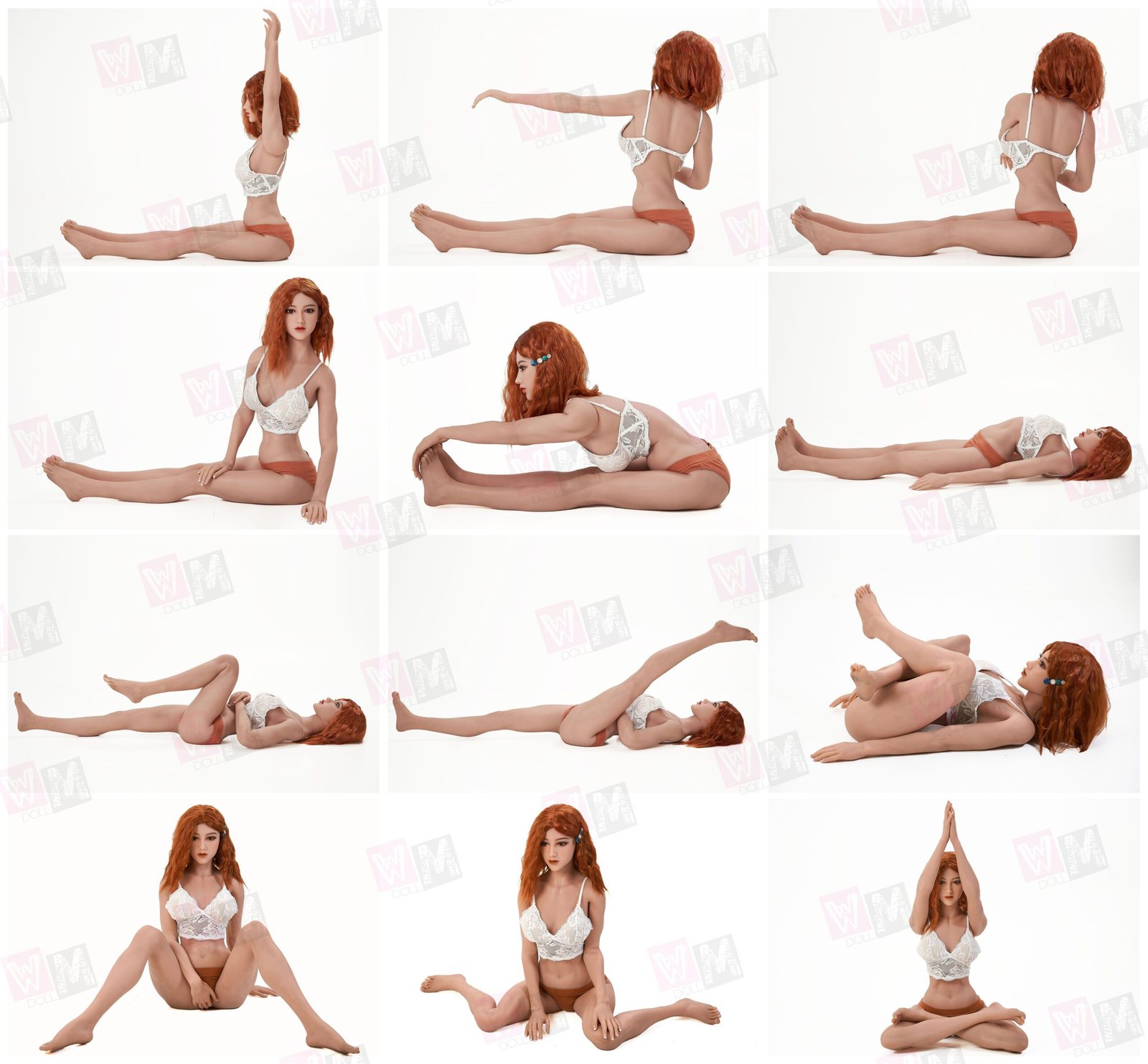
An upright sitting position is one of the simplest ways to display a doll.
The doll sits with its upper body supported and its legs extended forward or arranged in a comfortable position. This pose works well for photography, display, and dressing.
For better stability:
A forward-leaning position involves sitting with the legs extended while gently leaning the upper body forward.
This creates a more dynamic appearance and can be useful for photography. However, the movement depends on the flexibility of the hips, waist, and internal skeleton.
Do not force the torso forward if the doll’s structure does not allow sufficient movement.
Reclining positions allow the doll to lie on its back with its legs extended, slightly bent, or arranged asymmetrically.
This is generally easier to arrange than unsupported upright poses because the floor or bed supports much of the doll’s weight.
Place a soft cushion under the head, back, or knees when necessary. Avoid leaving excessive pressure on a single joint or body area.
Some articulated dolls can be positioned with one or both legs raised.
This type of pose requires sufficient hip and knee articulation. It should be attempted gradually, with the upper body and pelvis properly supported.
Never pull a leg upward by the ankle or foot. Support the thigh and move the hip and knee joints gently.
Cross-legged and open-seated positions can create different looks for display and photography.
However, these positions require adequate hip movement. If the legs resist movement, do not force them into place.
The correct position is always determined by the doll’s actual joint range rather than the appearance of a demonstration photograph.
Using two dolls together creates additional possibilities for photography and display.
The paired demonstrations in our image gallery show several arrangements, including face-to-face sitting, supported kneeling, and reclining combinations.
Here are some practical considerations when arranging two dolls.

Two dolls can be arranged in a seated position facing each other.
This creates a natural conversational appearance and works particularly well for lifestyle photography.
The key is to ensure that both dolls have sufficient support. If either doll cannot maintain an upright position independently, use cushions or other stable supports.
Kneeling arrangements can create more dynamic compositions.
Before attempting this position, check the movement range of the knees and hips. Use a soft surface to reduce pressure on the knees and ensure that the doll’s upper body is properly supported.
Reclining combinations are often easier to arrange because the surface supports more of each doll’s weight.
Position the dolls carefully, paying attention to weight distribution and contact points. Avoid placing the full weight of one doll on the other’s arms, wrists, or other small joints.
When arranging two dolls together:
The goal is to create a balanced arrangement without placing unnecessary stress on either internal skeleton.
Proper handling is essential for maintaining a doll’s appearance and internal structure.
Follow these steps when trying a new position.
Step 1: Prepare the surface
Choose a clean, flat, and padded surface. Make sure there is enough room to move the doll without hitting furniture or other objects.
Step 2: Support the body
When moving a doll, support its torso, pelvis, and larger body areas rather than lifting it by the hands, feet, or individual limbs.
Step 3: Move one joint at a time
Make adjustments gradually. Avoid twisting multiple joints simultaneously, especially when you are unfamiliar with the skeleton’s movement range.
Step 4: Use cushions when necessary
Pillows and soft supports can help stabilize the head, back, knees, and other areas.
Step 5: Check the final position
Make sure the doll is balanced and that no individual joint is carrying an unreasonable amount of weight.
If you encounter unusual resistance, cracking sounds, or movement that feels abnormal, stop and consult the manufacturer’s guidance.
Even a well-designed articulated skeleton has mechanical limitations.
Some common mistakes can increase the risk of joint damage or body deformation.
Forcing joints beyond their natural range
Never assume that a doll can reproduce every position shown in a photograph. Different models have different articulation limits.
Pulling the limbs
Avoid using the wrists, fingers, ankles, or feet as lifting points. These areas are not designed to support the entire weight of the doll.
Twisting joints under pressure
Rotating a limb while simultaneously forcing it into another direction can place unnecessary stress on the internal structure.
Leaving the doll in an extreme position for extended periods
Some positions create concentrated pressure on particular body areas. Return the doll to a more neutral position when the display or photography session is finished.
Ignoring weight distribution
A doll’s weight should be supported by its body and the surrounding surface, not concentrated on a single small joint.
For more information, see our guide to essential sex doll joint maintenance tips.
Material is an important consideration when choosing a sex doll, but it is only one part of the overall design.
Silicone and TPE dolls have different material characteristics, including differences in surface feel, flexibility, weight, and maintenance requirements.
However, the internal skeleton is particularly important when evaluating posing capability.
Two dolls made from the same material may have very different ranges of movement because of differences in their skeletons, joint structures, and body construction.
Before choosing a doll, consider both its material and its mechanical design.
You can learn more in our Silicone vs. TPE Sex Dolls comparison guide.
Different poses can also help create more natural-looking product photographs and display arrangements.
A few simple techniques can make a noticeable difference:
If you are interested in creating a dedicated display area, see our doll display ideas and planning guide.
No. The available range of movement depends on the internal skeleton, joint construction, body proportions, and model specifications. Always check the manufacturer’s instructions rather than assuming every doll can reproduce the same pose.
Supported sitting and reclining positions are generally easier starting points because a bed or padded surface can support much of the doll’s weight. Begin with simple arrangements and follow the movement limits for your specific model.
Support the doll’s body, move one joint at a time, and avoid forcing a limb beyond its natural range. Never lift the entire doll by its hands, feet, or individual limbs. Stop if you encounter unusual resistance.
Yes. Cushions and pillows can provide additional support for the head, back, knees, and other body areas. They can also help distribute weight more evenly and reduce pressure on individual joints.
Yes. Two dolls can be arranged in different seated, kneeling, and reclining combinations. Use a sufficiently large, stable surface and support each doll independently to avoid placing excessive weight on the other’s limbs or joints.
The materials have different physical characteristics, but the internal skeleton and joint design are more directly responsible for the available range of movement. Two dolls made from the same material may still have different posing capabilities.
There is no universal time limit for every model. Avoid leaving a doll in a position that creates concentrated pressure or sustained tension on its joints. Follow the manufacturer’s storage and handling recommendations.